
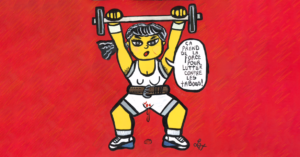
Smoothie énergisant à saveur de menstrues!
Pourquoi se remuer le popotin et faire battre notre patate à tout rompre? Selon une étude datant de 2021, citée dans Le Journal de Montréal le 30 juin dernier, pratiquer une activité physique, surtout dans la nature, « favoriserait une meilleure santé cardiovasculaire, régulariserait la tension artérielle, en plus de

Endometriosis under an intersectional lens
By Emma Léger. Endometriosis is a condition that causes chronic pain in approximately 1 in 10 people that menstruate, yet it is still under researched and misdiagnosed. The treatment and diagnosis of endometriosis and the barriers to care are best understood through an intersectional lens that considers how different social
Period Stories Across Cultures
I grew up in a very conservative Muslim South Asian household where the topic of menstruation was highly stigmatized. As a young child, I was forbidden from attending sex education classes or even mentioning to my dad that I got my period. My very first experience, and the ones following
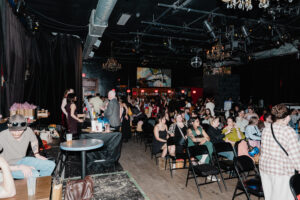
Recap: The 2026 Annual Gala for Menstrual Justice
By Aylin Sari and Célie Bayen. 150 people. Music, performances, laughter. All brought together by one shared conviction: advancing menstrual justice. On June 2, 2026, we held our Annual Gala, one of Monthly Dignity’s most important nights of the year. It’s when we pause to look back on how far

Movie Night with Monthly Dignity: Perimenopause: Finding Your Voice Again
Following the success of our first “Movie Night” centered on menopause, we naturally wanted to keep amplifying voices speaking up on these overlooked topics. It was in that spirit that, on Tuesday, March 3rd at Cinéma Moderne, Monthly Dignity hosted a screening of The (M) Factor 2: Before the Pause

Sexagénaire jase pipi!
En juin 2025, le Courrier de Louise Deschâtelets, publié dans Le Journal de Montréal, nous informait de la naissance d’un “projet novateur pour les femmes de 55 et plus”, soit l’application mobile Oups! conçue pour traiter l’incontinence urinaire. Si je ne crois pas devoir m’inclure dans le “45% des femmes
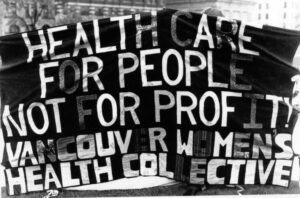
Menstrual tracking, wellness, and histories of feminist self-help
…But I didn’t, and still don’t, like making a cult of ‘women’s knowledge,’ preening ourselves on knowing things men don’t know—women’s deep, irrational wisdom, women’s instinctive knowledge of nature, and so on.
To the One I Was Before the Red
“To the One I Was Before the Red” is a collection of letters, poems, and confessions written by women of all ages and backgrounds.
Multiple voices gathered around a shared moment: the moment when the body began to speak, in its own way, through blood, surprise, shame, pride, transformation.

Reclaiming Your Blood: Decolonizing the Menstrual Cycle
Ever wondered why “being on your period” is so demonized, pathologized and deemed as shameful by society, culture, religion, and the medical system? It’s not because there is something demonic or “wrong” or disgusting with menstruation or the people who experience it. It is because the dominant systems in power
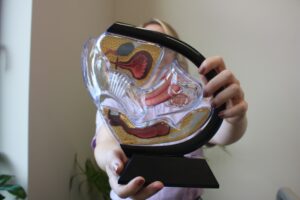
Confessions of a Chronic Pee-er: Pelvic Floor Information & Misinformation
In May of 2023, I started going to the bathroom a lot, but nothing would come out. It felt like I had forgotten how to pee. This struggle led me to explore the complexities of my body and the often-ignored pelvic floor. I met Karina, an occupational therapist, who opened
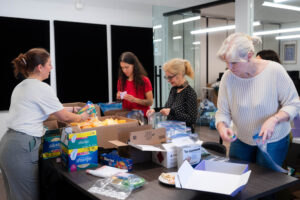
How much does it cost to menstruate in Canada?
Menstruation in Canada comes with a hidden price tag that goes far beyond the cost of pads and tampons. With one in four Canadians viewing periods as dirty and unclean, the stigma surrounding menstruation remains strong. Alarmingly, 17% of menstruators face menstrual poverty, a figure that rises to 25% in
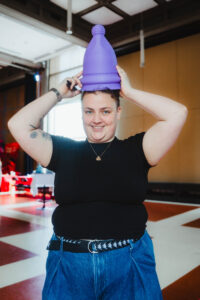
When Periods and ADHD Collide: A Neurodivergent Menstruator’s Experience
Menstruation and neurodivergence are inherently connected, and yet very little research and attention is given to the relationship between them. This article takes a closer look at how the two interact, and explores the personal experience of one neurodivergent menstruator.
Periods on Campus
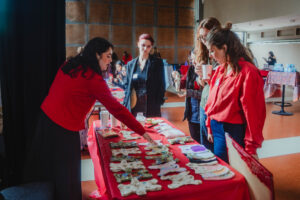
The second annual Periods on Campus Symposium highlighted how menstrual equity is about more than free products—it’s about designing systems that center justice, inclusion, and dignity. From accessible education and culturally relevant outreach to policy change and creative storytelling, the movement is growing stronger together, grounded in community and collective
 EN
EN  FR
FR