
By Déborah Coutinho
Menstruation in Canada carries a heavy and hidden price tag that extends far beyond the price of pads and tampons. It is a monthly cycle defined by high costs: financial strain, physical toll, and social stigma.
One in four Canadians agree that periods are dirty and unclean, while 22% believe that menstruation should not be publicly disclosed and menstrual products should be kept out of sight. That is what a public opinion research survey conducted by Environics Research on behalf of Women and Gender Equality Canada (WAGE) discovered in 2023.
If roughly 25% of our population holds those beliefs, it is not hard to imagine why one of the most natural processes of menstruators’ lives is still such a taboo. On top of facing misconceptions and the physical pain of the uterine muscles contracting to shed the lining every month, 17% of menstruators in Canada also suffer the financial pain of menstrual poverty. That number jumps to 25% in lower-income households, according to the “Beyond the pad: The real price of period poverty in Canada” study.
In 2023, around one in five Canadians who menstruate said they were worried they wouldn’t be able to afford period products within the next year. The same study shows that periods can be quite expensive. Over a lifetime, someone who menstruates might spend up to $6,000 just on period products, not including pain relief medication, new underwear, or any other extras.
It’s not the same everywhere and for every group
Period poverty doesn’t affect Canadians the same way in every province and territory. A 2024 report by the National Union of Public and General Employees (NUPGE) reveals an alarming scenario for rural or Indigenous communities: they can pay double the price for the same products found in larger cities such as Toronto. According to the report, a single box of tampons can cost from $16 to $45 on rural First Nations reserves. As an example, the report compares the 2018 prices of a box of tampons or pads between Nunavut ($15 to $18 per box) and Vancouver ($3 to $11 per box).
Besides the prohibitive cost, it is not uncommon for communities in remote areas to lack access to menstrual items if cargo doesn’t arrive. The NUPGE Period Poverty in Canada Report also states that reusable products aren’t the solution for some communities, even if they reduce the ongoing monthly cost. They aren’t always available, the initial investment is higher, and for people experiencing homelessness, there are huge difficulties in finding a safe, respectful place to clean the cups.
Another aspect mentioned in the same report is that certain groups of women and gender-diverse people are more likely to experience period poverty. The groups include women who are black, indigenous, people of colour (BIPOC), women living with disabilities, immigrants or refugees, and LGBTQI2S people. In other words, they are more likely to experience insecure financial situations, have lower incomes, and/or precarious employment, which may also lead to unreliable access to menstrual products in Canada.
Periods in numbers
Okay, so period poverty is unfortunately a reality in Canada and many other countries around the world. But how about the actual numbers impacting the lives of roughly 20 million people who menstruate in this country?
Let’s talk numbers!
According to Ecoflo, on average, a person with a uterus menstruates for about 38 years of their life, typically from age 12 to 50. Assuming periods last approximately 5 days, and menstruators use 4 to 5 pads per day, that gives an average of 20 to 25 pads per cycle. In a year (12 cycles), that means roughly 300 pads. Over a lifetime (38 years of menstrual cycles), we are talking about 11,400 pads per person. This overwhelming number symbolizes a huge impact on the environment and the wallet.
As we already discussed, prices of pads and tampons vary widely from province to province, territory to territory, between urban centres and remote rural areas. That also applies to reusable menstrual products bought in local stores. Online, however, the prices seem to be more even across the country (with potentially different shipping costs under $50). On average, prices for menstrual cups, discs, or period pants are $35 each (plus taxes) in one of the most well-known Canadian brands of period products.
Okay, so how do we minimize the impacts?
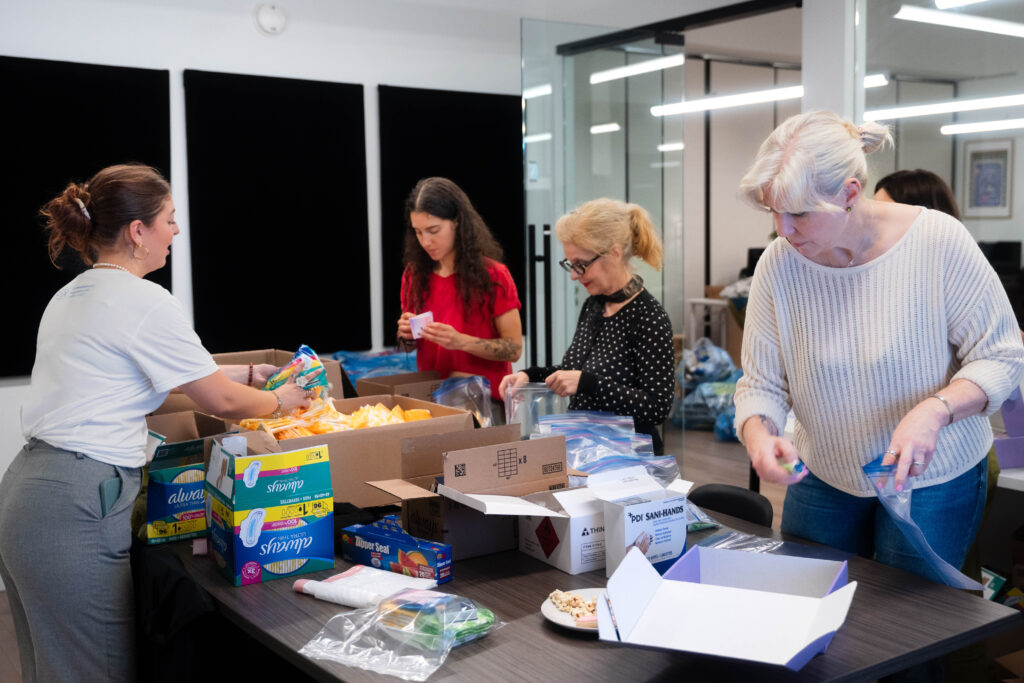
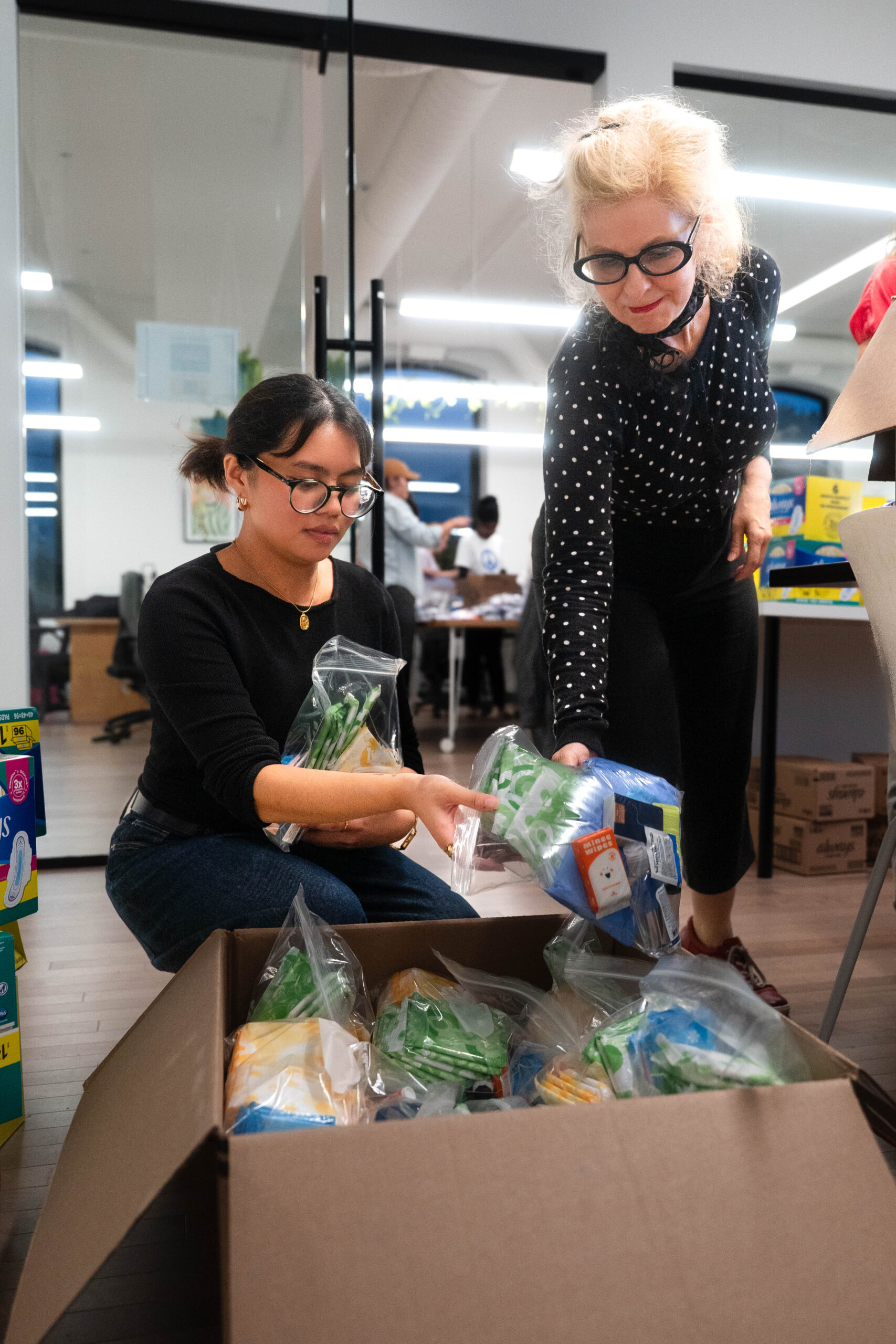
While reusable menstrual products are an excellent eco-friendly choice, the higher upfront cost and lack of availability can be significant barriers. Community centres, NGOs, Food Banks Canada, and schools often provide free menstrual products to ensure everyone has access to the supplies they need.
For those seeking support in times of need, the Period Pin website has an interactive map to help find the closest option to get free menstrual products in your province or territory.
Here is also a non-exhaustive list of resources across the country that can help you out:
On a national level
- Moon Time Connections – True North Aid (Indigenous-led group)
- The Period Purse
- Help A Girl Out (HAGO)
- Food Banks Canada
Provincial & Territorial level
Alberta: (AB)
British Columbia: (BC)
- United Way British Columbia
- Health Sciences Association (HSA) – Stomp Out Period Poverty
- Pacific Immigrant Resources Society
Manitoba: (MB)
New Brunswick: (NB)
Newfoundland and Labrador: (NL)
Nova Scotia: (NS)
Ontario: (ON)
- Bleed the North
- United Way Niagara
- United Hastings & Prince Edward
- United Way/Centraide of Stormont, Dundas & Glengarry
- St Vincent Place
Prince Edward Island: (PEI)
- PEI Advisory Council on the Status of Women (PEIACSW)
- No Questions Asked Period
- Aboriginal Women’s Association of PEI (AWAPEI)
Quebec: (QC)
Saskatchewan: (SK)
Territories
Northwest Territories: (NWT)
Nunavut: (NU)
Yukon: (YT)

This article was written by Déborah Coutinho, as part of The Red Pen Collective writing group created by Monthly Dignity.
 EN
EN  FR
FR