
By Clare Walker
…But I didn’t, and still don’t, like making a cult of ‘women’s knowledge,’ preening ourselves on knowing things men don’t know—women’s deep, irrational wisdom, women’s instinctive knowledge of nature, and so on.
“All that all too often merely reinforces the masculinist idea of women as primitive, inferior; women’s knowledge as elementary, primitive, always down below at the dark roots, while men get to cultivate and own the flowers and crops that come up into the light…Why should women feel blindly while men get to think?”
Ursula K. Le Guin (2010)
In the quote above, speculative fiction writer and literary critic Ursula K. Le Guin reflects on the echoes of gender essentialism and its genealogy within the feminist movement. Certain branches of second-wave feminism (the mainstream set of feminist ideas in the 1960s onward) privileged this feeling, feminine intuition, in a landscape of an unfeeling white supremacist patriarchal capitalism. This ‘instinctive wisdom’ channelled by the divine feminine has found a resurgence in the contemporary wellness and self-care movement, one largely driven by and directed towards women.
Within a number of second-wave feminism’s subgroups (like ecofeminism and Goddess feminism), the individual body and female biology were the patriarchy’s site of oppression and women’s power source for feminist liberation. The charging of the individual female body with power and agency is no surprise in the 1970s, as reproductive rights and sexual liberation became key sites of feminist organizing in this same period.
In this text, I want to call attention to how feminist histories of the body, contemporary wellness culture, and reproductive technologies collide. Menstrual tracking– part of a broader constellation of hormonal health and wellness, focusing on observing patterns in one’s menstrual cycle –is a key site of this collision. Menstrual health– as it relates to the ‘normalcy’ of our cycles and their phases, hormonal birth control, and what to do about it –has entered into everyday consciousness by means of social media algorithms and wellness technologies. In this way, it has become difficult to separate the politically conservative, anti-intellectual, and pseudoscientific information from meaningful critiques of menstrual health research and technologies.
By tracing the history of feminist self-help, I aim to show how contemporary discussions of menstrual health are informed by similar priorities (and problems) of the second-wave feminist movement. Ideally, unpacking this history and its echoes in the contemporary wellness movement can help us question how menstrual tracking is both a) built upon legitimate feminist concerns and b) captured by problematic forces.
A brief history of feminist self-help
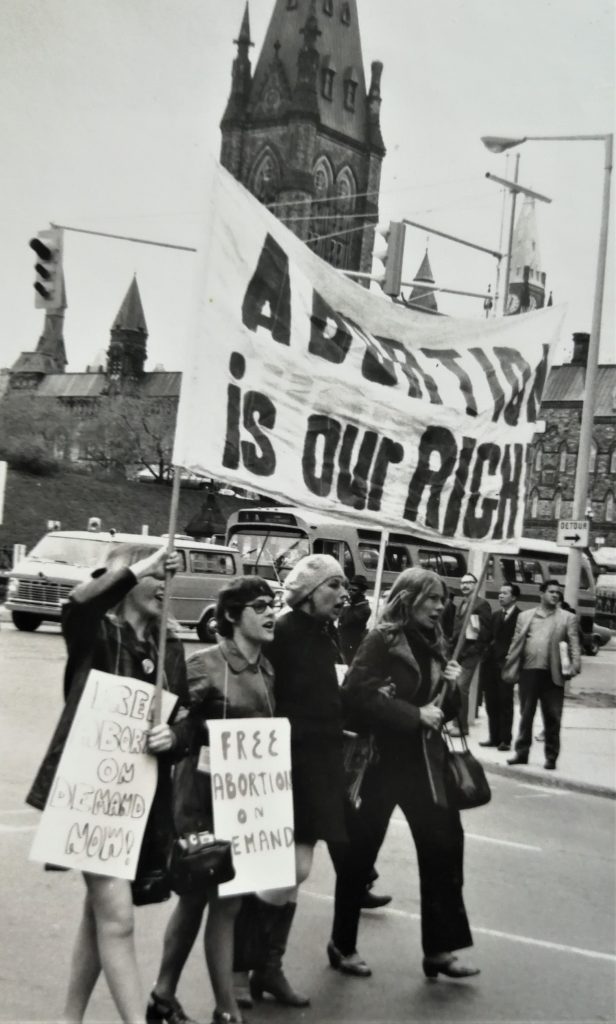
To situate the feminist undertones of wellness culture, we can turn towards a fruitful history of feminist self-help. Born with the reproductive rights movement of the 1970s, the feminist self-help movement cultivated a specific focus on providing accessible (and potentially criminalized) gynecological and contraceptive treatments in non-hierarchical environments. The movement urged women to reclaim agency over their individual reproductive health through instructional workshops, mobile clinics, and mass-distributed booklets, most famously Our Bodies Ourselves. Feminist self-help also pushed back against the hierarchical violence of medical clinics, which were not caring, safe, or trustworthy environments for women (and particularly racialized and working-class women).
In Seizing the Means of Reproduction, feminist historian Michelle Murphy names the feminist self-help movement as a form of “protocol feminism”, where feminist activism was organized around teaching others how to take charge of their own health, often through booklets or live demonstrations. These demonstrations included live enactments of vaginal and cervical self-exams, as well as in-depth demonstrations of at-home abortion technologies. As Sadie Borgard writes of the movement, “Examining their bodies represented a radical form of empowerment”.
Murphy argues that the feminist self-help movement privileged the autonomous role of ‘scientist-subject’ who was deeply responsible for their own body. This role is not born of a vacuum; it was a response to living under conditions of precariously-accessible and still-patriarchal reproductive health settings and resources.
However, like much of second-wave feminism, the feminist self-help movement often failed to address the intersectional gaps in its outreach and priorities. Following its connection with Goddess feminism of the second-wave, feminist self-help was usually premised on the centrality of the explicitly individual, cis-gendered female body. As reproductive health historian Hannah Dudley-Shotwell points out, mainstream feminist self-help organizing implicitly centred the middle-class, white, and able body in their organizing.
While self-help activist groups like the National Black Women’s Health Project and the Native American Women’s Health Education Resource Center connected self-care and reproductive health with the intersectional realities of race and class, mainstream feminist self-help groups, like the Feminist Women’s Health Centre, were often less concerned (and even exclusionary) of holistic, intersectional approaches to health. Echoing Borgard, many of the mainstream feminist self-help organizers were fundamentally class-, race-, and trans-exclusionary in their approaches. Recognizing the nuanced history of this strain of activism, we can explore the resonances– both positive and negative– of the feminist self-help movement in the contemporary practice of menstrual tracking.
Menstrual tracking and hormonal wellness
Menstrual tracking, at its core, is the practice of documenting the menstrual and hormonal cycles. This can refer even to the most passive attention to the general length of one’s period, and it can equally refer to elaborate charting of the hormonal phases, physical and emotional changes, and body temperature. Often, menstrual tracking involves technologies or systems that aim to monitor, predict, or regulate one’s menstrual cycles. These technologies include simple calendars, basal temperature tracking charts, and, more recently, mobile apps.
While more simplistic tracking systems are often maintained out of convenience (noting the days on your agenda when you get your period, for example), emerging wellness practices of menstrual tracking (and hormonal health, more broadly) take it a step further. In many wellness regimes, menstrual tracking is accompanied by lifestyle shifts (in diet, exercise, sexual, and work rhythms), like seed cycling, low-intensity, ‘cortisol-lowering’ exercise, diets high in protein and iron, and most controversially, weaning off of hormonal birth control. In all of these examples, the imperative of hormonal health and menstrual tracking is a ‘return to nature’; calling upon ‘non-toxic’ and ‘ancestral’ approaches to both manage and attune oneself to their menstrual cycle and a more ‘natural’ hormonal health more broadly.
Freya Bennet writes in a 2025 opinion piece about the excitement she feels in tracking her cycle manually, taking her basal body temperature, observing her cervical mucus, and noting other changes in her energy and mood. Importantly, she points out, this method was not a form of contraception, but rather a way of empowering herself through the Fertility Awareness Method. This emphasis on bodily self-knowledge as a form of empowerment has clear resonances with the aforementioned principles of feminist self-help.
Interest in menstrual tracking also emerges out of protest to the status quo of hormonal health research. As reproductive health journalist Kate Muir explains, dissent towards hormonal contraception (particularly the birth control pill) is growing, as menstruators of all ages feel betrayed and under-informed by its various negative side effects. She writes, “I want to weep when women tell me their stories of being “popped on the pill” for acne as an adolescent, and – like a frog slowly being boiled alive – not realizing until years have passed that a particular pill has turned them into a different person: fatigued, depressed and stressed”. In this way, the problem lies not in birth control pills or hormonal contraceptives writ large, but rather in the continued prescription of outdated pill varieties and the lack of continuous, informed choice by both adult and child menstruating bodies.
These concerns, amplified by hundreds of thousands of anecdotal accounts of hormonal birth control’s negative side effects that resonate on social media, form a deeply necessary (though not entirely innocent, as Emma Goldberg writes for the New York Times) critique against hormonal, reproductive, and gynecological research, which is, at its core, founded upon the subjugation of Black female bodies, poorly executed scientific testing, and continuous breaches of dignity against the medicalized female body and reproductive system.
That said, what and who are these rejections of synthetic, “unnatural” hormonal health regulation leaving behind?
Some key critiques
While the feminist self-help movement was indeed essential for the democratization and normalization of reproductive autonomy, the same critiques of its mother, second–wave feminism, have carried over into contemporary cultures of wellness and self-care. Here, I want to highlight two key concerns that manifest in discussions of menstrual tracking: The centrality of gender essentialism in ‘natural’ hormonal health and menstrual regulation and the ever-present surveillance occurring both towards the self and through menstrual tracking apps.
i. gender essentialism
One of the central critiques of feminist self-help (and of the second-wave feminist movement more generally) is the reliance on the narrowly defined body. Within this narrow definition are undercurrents of gender essentialism: the belief that gender is predictive of certain characteristics, behaviours, and truths. Gender essentialism often leans on notions of the ‘natural’ and ‘divine feminine’, often referencing ancient wisdoms to paint itself in historical legitimacy. Recalling Ursula K. Le Guin’s quote above, the category of ‘women’s knowledge’ as primal and innate borrows from the logic of gender essentialism, as it distinguishes ways of thinking and instincts that come ‘naturally’ to men and women individually.
Importantly, gender essentialism defines itself against the idea that gender can be practiced or embodied in diverse and evolving ways, coding these differences as ‘unnatural’, and, as historian Kathleen Belew writes, ‘impure’. This binary language of the natural/unnatural, the pure/impure, the clean/toxic, and ultimately, the feminine/masculine, is important to understanding the contemporary wellness movement. Belew, who researches history’s traces on contemporary white supremacist movements, writes of this pure/impure binary in alternative lifestyles (including wellness), which codes certain foods, products, and ways of living as decidedly ‘clean’ or ‘toxic’. Following this logic into its rabbit hole, Belew writes, begins to code certain bodies as intrinsically ‘pure’ and ‘clean’ or ‘impure’ and ‘toxic’.
With regards to menstrual tracking and hormonal health, wellness culture borrows a similar language, coding certain diets, exercise regimes, period products, and contraceptives as ‘clean’ or ‘toxic’. Notably, hormonal or ‘synthetic’ birth control has received this critical treatment from wellness culture, particularly on social media, while menstrual tracking is hailed as the natural alternative, founded upon the legitimacy of intuitive, primal knowledge emerging from the body’s ‘natural’ state .
While the critique of hormonal birth control is indeed founded on a number of credible studies and a tidal wave of anecdotal evidence, the encouragement to abandon hormonal birth control altogether requires more forethought and reputable, reproducible scientific research, rather than gestures to the flimsy ‘divine feminine’.
ii. surveillant self-care
In a similar line of thinking, wellness and self-care culture encourages, at minimum, a conscious supervision of one’s body, its appearance, and its behaviours. While self-care (and wellness more broadly) can be employed in the service of collective liberation and political action, it has been captured by broader capitalist interests of commodification and manufactured exclusivity, as Azeezat Adekanye writes for The Republic.
Even among those with access to wellness and self-care, philosophers, journalists, and social scientists have remarked on the conflation of cultivating a healthy body with cultivating an upstanding moral character for decades (or centuries, if we look towards some interpretations of Ancient Greek philosophy). In other words, wellness, self-care, and health-conscious living are caught in a pervasive association with ‘goodness’, morality, and, to echo previous paragraphs, cleanliness and purity.
This association, as French philosopher Michel Foucault famously proposes, encourages a surveillance and disciplining of the self, due to an internalization of societal norms and expectations about the body. Many wellness and self-care practices, such as menstrual tracking, provide a new domain for this self-surveillance to occur. In a qualitative study of US-American women using period tracking mobile apps, researchers highlighted the connections between ‘knowledge’ and ‘control’ over one’s body that are mediated through menstrual tracking apps, which encourage users to constantly monitor and input a plethora of physical and emotional states. While ‘protocol feminism’ within the feminist self-help movement brings to mind systematized self-examination and privileges self-knowledge as a form of feminist activism, the rigorous, sometimes obsessive self-surveillance of wellness can be far more harmful, as this study hints towards.
When it comes to menstrual tracking, self-surveillance is not the only surveillance of concern. Hormonal health and menstrual tracking mobile apps, like Flo, have been critiqued and sued for collecting and sharing users’ health data with companies like Google and Meta for advertising purposes. More pressingly, legal experts on privacy law are urging menstruators in countries that are constricting reproductive rights (like the United States) to delete menstrual tracking apps, as their health data could be used to prosecute them for illegal abortions.
Ultimately, both of these critiques assume (and aspire to) a ‘normal’ or even ‘perfect’ cycle in the ‘normal’ and ‘perfect’ menstruating body. While undercurrents of gender essentialism and surveillance are not cause to ‘do away’ with the practice of menstrual tracking or self-care more generally, understanding these critiques can help us navigate the oversaturated realm of wellness and reproductive health, particularly online.
Some reconciliation
“Caring for myself is not self-indulgence, it is self-preservation, and that is an act of political warfare.”
Audre Lorde
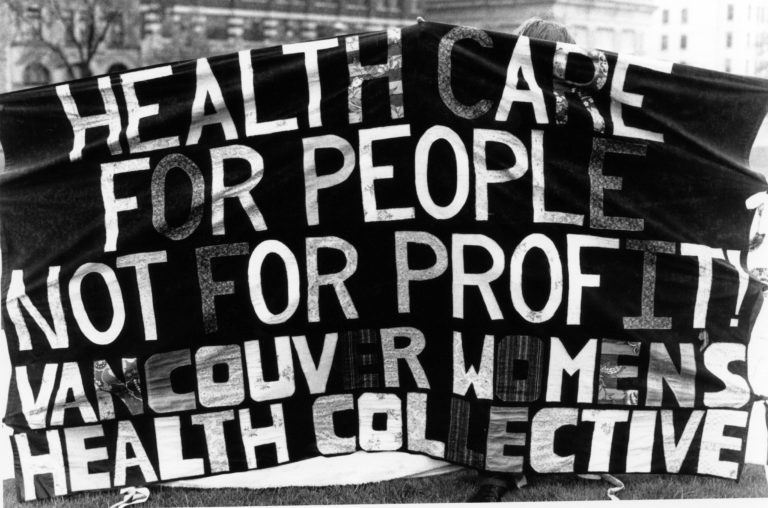
As long as there is wellness discourse, there will be a critique in equal measure. While this critique of wellness is essential, it is equally necessary to parse out of the overcorrective impulse to critique wellness culture from the legitimate need for accessible, autonomous, and dignified reproductive care. With reference to wellness culture and its broad appeal among women, we hear familiar echoes of control, deprived agency, and patriarchal models of scientific knowledge. With reference to menstrual tracking, these echoes call us to abandon hormonal birth control and to empower ourselves with a vertical depth of divine, primal knowledge of our bodies, ourselves.
Black feminist thought, including (though not limited to) Audre Lorde’s perennial quote about the political act of self-care, presents a generative counterpoint to wellness or self-care as a consumer culture, aesthetic ideal, or disciplinary instrument. Thinkers like Lorde, as well as Tricia Hearsey and Fariha Roisin, propose an understanding of wellness and self-care that a) reflects a critique of misogynistic currents in reproductive health research, b) valorizes lived experience as legitimate health knowledge, and c) understands the diversity of contraception and menstrual health devices as a source of empowerment, rather than a source of toxicity.
Turning to the history of feminist self-help, in its revolutionary and problematic whole, provides a useful lens to unpack these simultaneous, sticky truths. In holding these two realities together, how do we move forward?
Look towards the work of historical and contemporary feminist self-help organizations
The history of feminist self-help provides an excellent starting point for understanding how the body, choice, and health have become a sensitive intersection in contemporary feminism. Cited historians from this article– Michelle Murphy and Hannah Dudley-Shotwell– provide useful, nuanced accounts of feminist self-help.
Looking towards feminist self-help organizations of the like the National Black Women’s Health Project, the Native American Women’s Health Education Resource Center, and the Feminist Centre for Reproductive Liberation illuminate the possibilities of practical feminist self-help.
Think critically about the use of ‘purity’, ‘toxicity’, and the ‘divine feminine’ in health and wellness discussions, especially on social media platforms
While social media has become an important site of sharing and engaging menstrual health and reproductive justice, it is also a site of enormous misinformation and political ambiguity. Emily Pfender and M. Marie Devlin (communications researchers specializing in social media and women’s health) argue that social media influencers’ popularity and persuasiveness is often confused with credibility by viewers.
In other words, while influencers may tout the improvements in skin, energy, and weight following their discontinuation of hormonal birth control in favour of menstrual tracking, it is typically not clear whether they are sharing accurate information, nor is it clear if they have a financial interest in directing you to ‘non-synthetic’ options. Stay vigilant of the depth and accuracy of short-form content, particularly if you’re not sure of the creator’s credentials or affiliation!
If you’re interested in menstrual tracking, explore options that do not collect or harvest your data
Finally, menstrual tracking is, in fact, a helpful way to understand your menstrual cycle, and to note any recurring or novel symptoms that may arise. They can also be useful documents to share with your healthcare provider! Keeping in mind the problems with mobile tracking apps, listed below are end-to-end encrypted or store data locally (ie. on your device, not on a centralized server!)
This article was written by Clare Walker, as part of The Red Pen Collective writing group created by Monthly Dignity.
 EN
EN  FR
FR